
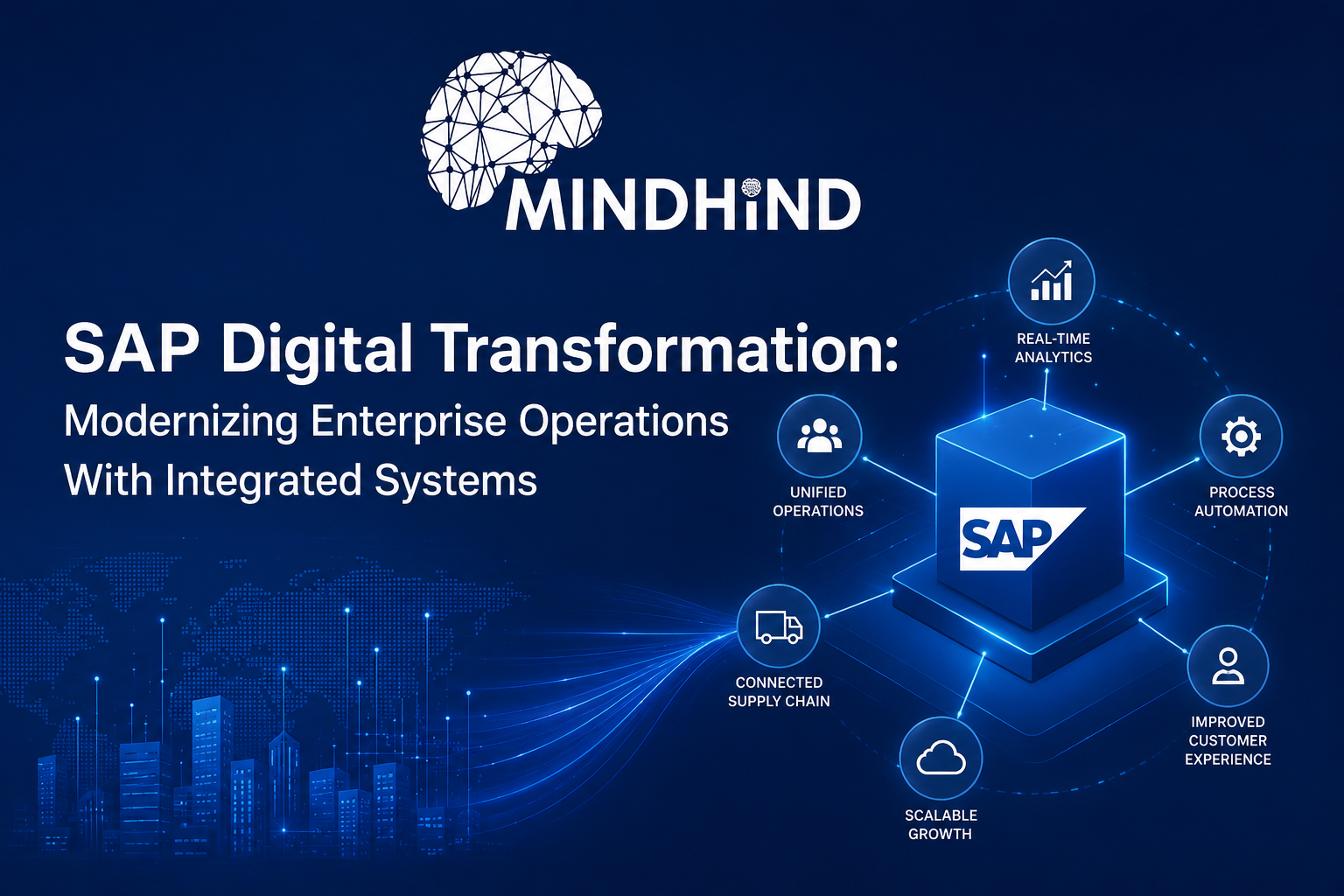
Enterprises often manage finance, procurement, inventory, production, supply chain, human resources, and reporting through separate systems. When these platforms do not communicate effectively, teams face duplicated data, delayed decisions, manual work, and limited operational visibility.
SAP digital transformation helps organizations connect core business functions through an integrated enterprise platform. By bringing data, processes, and reporting together, SAP can improve coordination across departments and support faster, more informed decision-making.
However, successful transformation requires more than installing new software. Businesses need clear objectives, accurate process mapping, structured migration, employee involvement, and continuous performance improvement.
Connecting Core Enterprise Operations
SAP can create a shared operational environment across multiple business functions.
Finance teams can access real-time transaction data, improve budgeting, and simplify financial reporting. Procurement teams can manage suppliers, purchasing, approvals, and contracts through standardized workflows.
Inventory and production teams can track materials, demand, manufacturing schedules, and product availability. Supply chain teams can improve planning, logistics, warehouse management, and order fulfilment.
Human resources departments can manage employee records, payroll, recruitment, performance, and workforce planning. Management teams can use dashboards and reports to monitor performance across departments.
This connected approach reduces dependence on spreadsheets and disconnected applications. It also helps businesses create a more consistent source of information across the organization.
Effective SAP integration is especially important when SAP must exchange data with CRM platforms, cloud applications, e-commerce systems, analytics tools, supplier portals, or legacy software. Well-planned integrations reduce manual entry and support more accurate data across systems.
Planning SAP Implementation and ERP Modernization
A successful SAP implementation should begin with clear business goals.
Organizations should define which operational problems they want to solve, which processes need improvement, and how success will be measured. These goals may include reducing processing time, improving inventory accuracy, increasing reporting visibility, or simplifying financial operations.
Process mapping is a critical step. Businesses should document how work is currently completed, identify delays and unnecessary approvals, and design improved workflows before configuring the system.
Data migration also requires careful planning. Customer, supplier, product, employee, and financial records should be cleaned, standardized, and validated before being moved. Poor-quality data can affect reporting, automation, and everyday operations.
ERP modernization may involve moving from older SAP systems to a modern platform, adopting cloud-based capabilities, improving integrations, or replacing manual processes with automation.
Migration should be completed in phases where possible. Pilot testing, system validation, backup planning, and rollback procedures can reduce disruption and help teams resolve issues before a wider rollout.
Improving Adoption, Performance, and Business Value
Employee adoption plays a major role in SAP success.
Users should be involved during planning, testing, and implementation. Their feedback can help identify unnecessary steps, unclear screens, missing reports, and workflows that do not reflect actual business operations.
Training should be practical and role-specific. Finance, procurement, warehouse, production, HR, and management teams may require different training based on their responsibilities.
After launch, organizations should measure system usage, process completion time, data accuracy, reporting quality, inventory performance, user feedback, and operational costs.
SAP environments should also be reviewed regularly. Permissions, workflows, integrations, reports, and automation may need to change as the organization grows.
Working with experienced SAP consulting services can help enterprises assess existing systems, plan modernization, manage migration, improve integrations, and increase user adoption.
MindHind’s SAP Consulting services help organizations connect business functions, modernize ERP environments, and improve enterprise performance.
Assess your current SAP processes with MindHind to identify integration, modernization, and performance-improvement opportunities.
